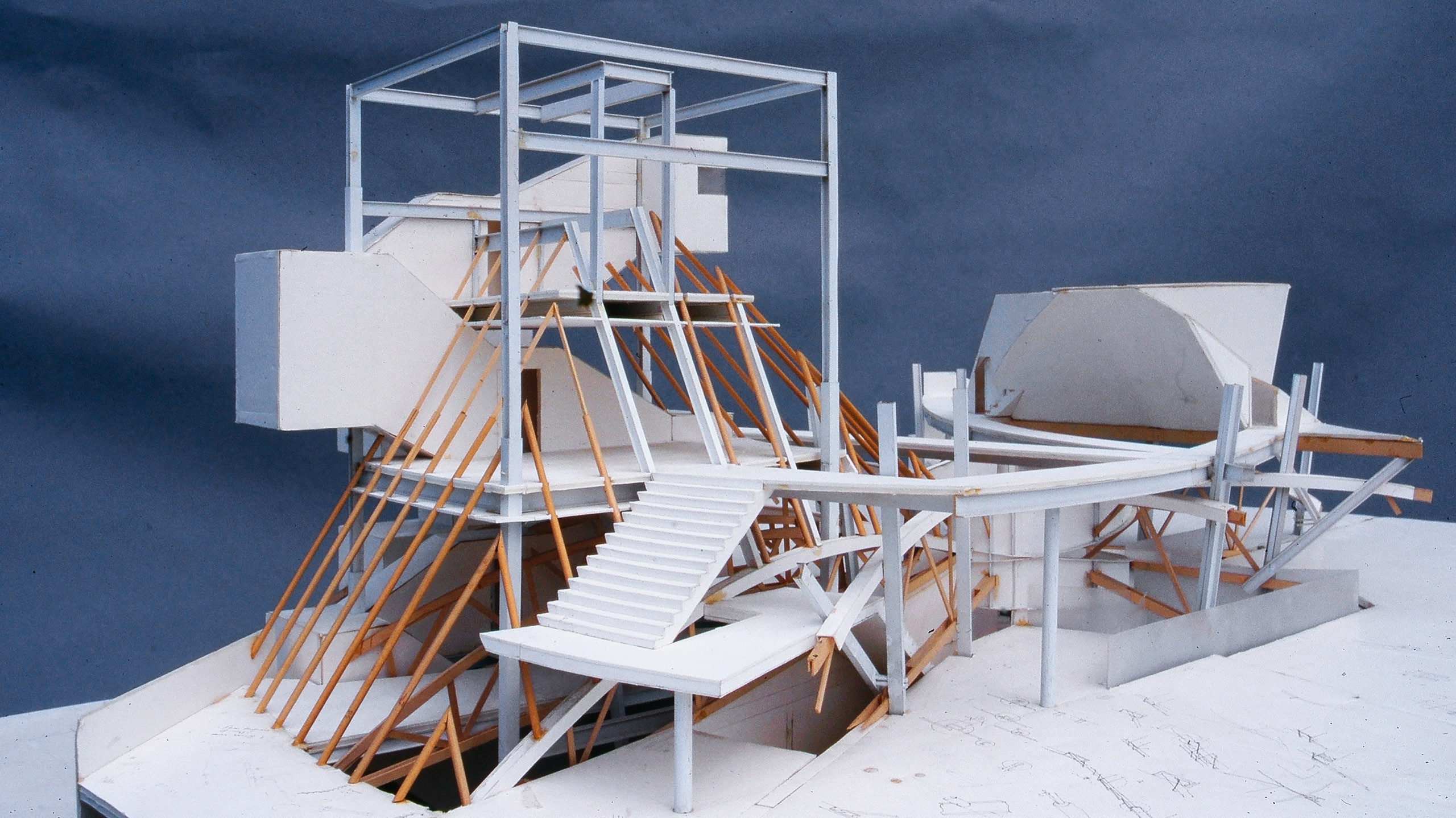
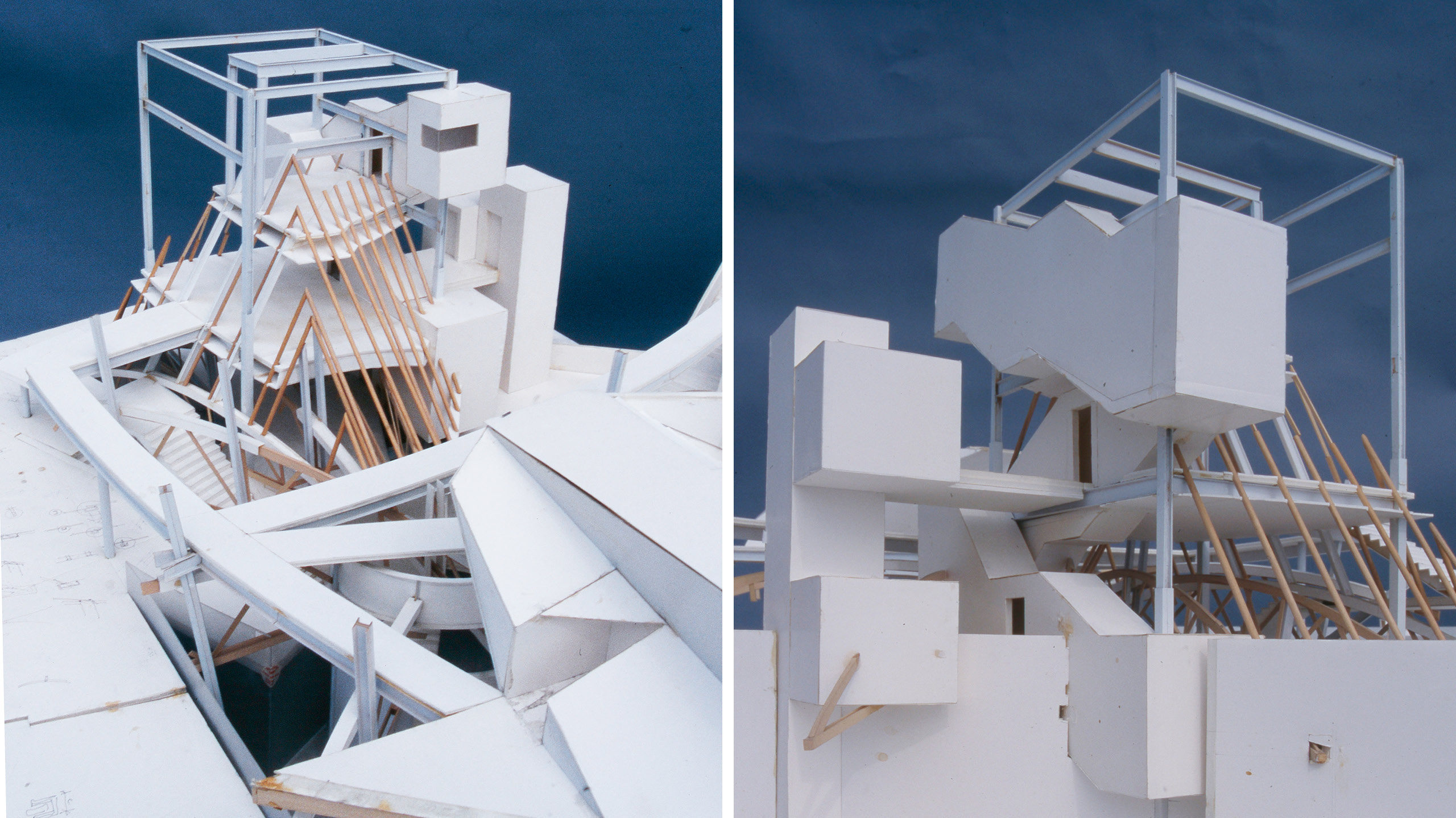
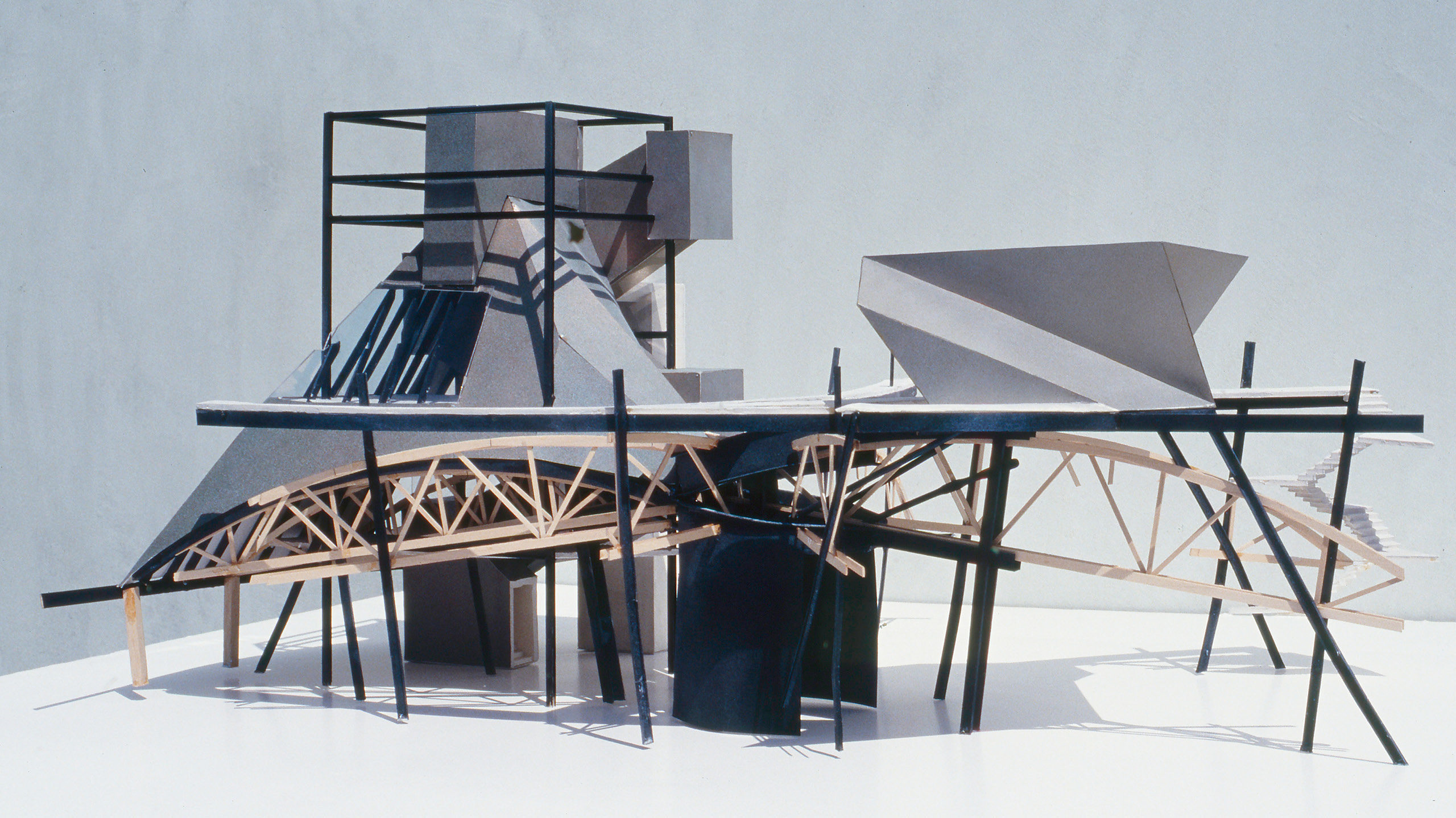
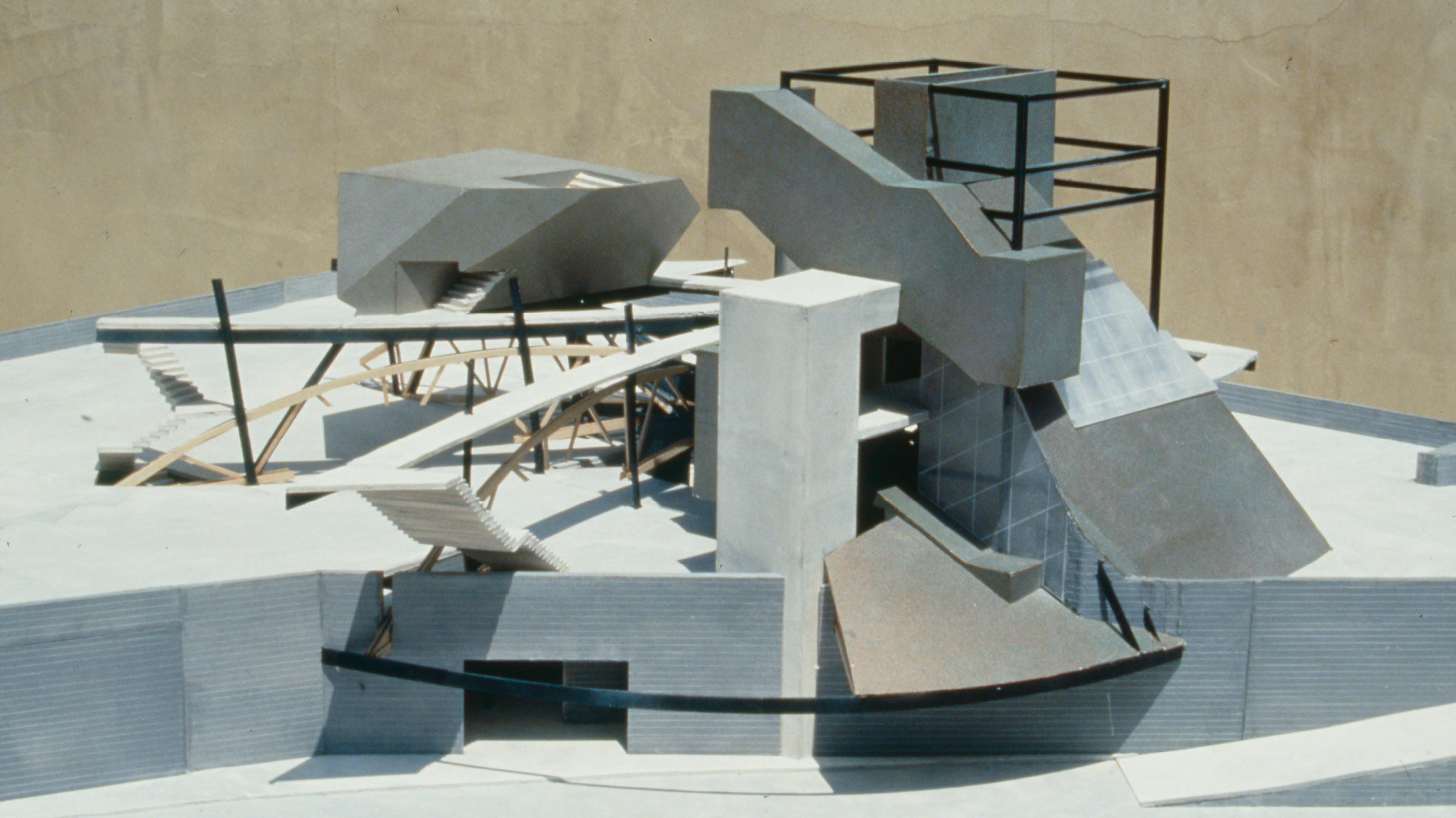
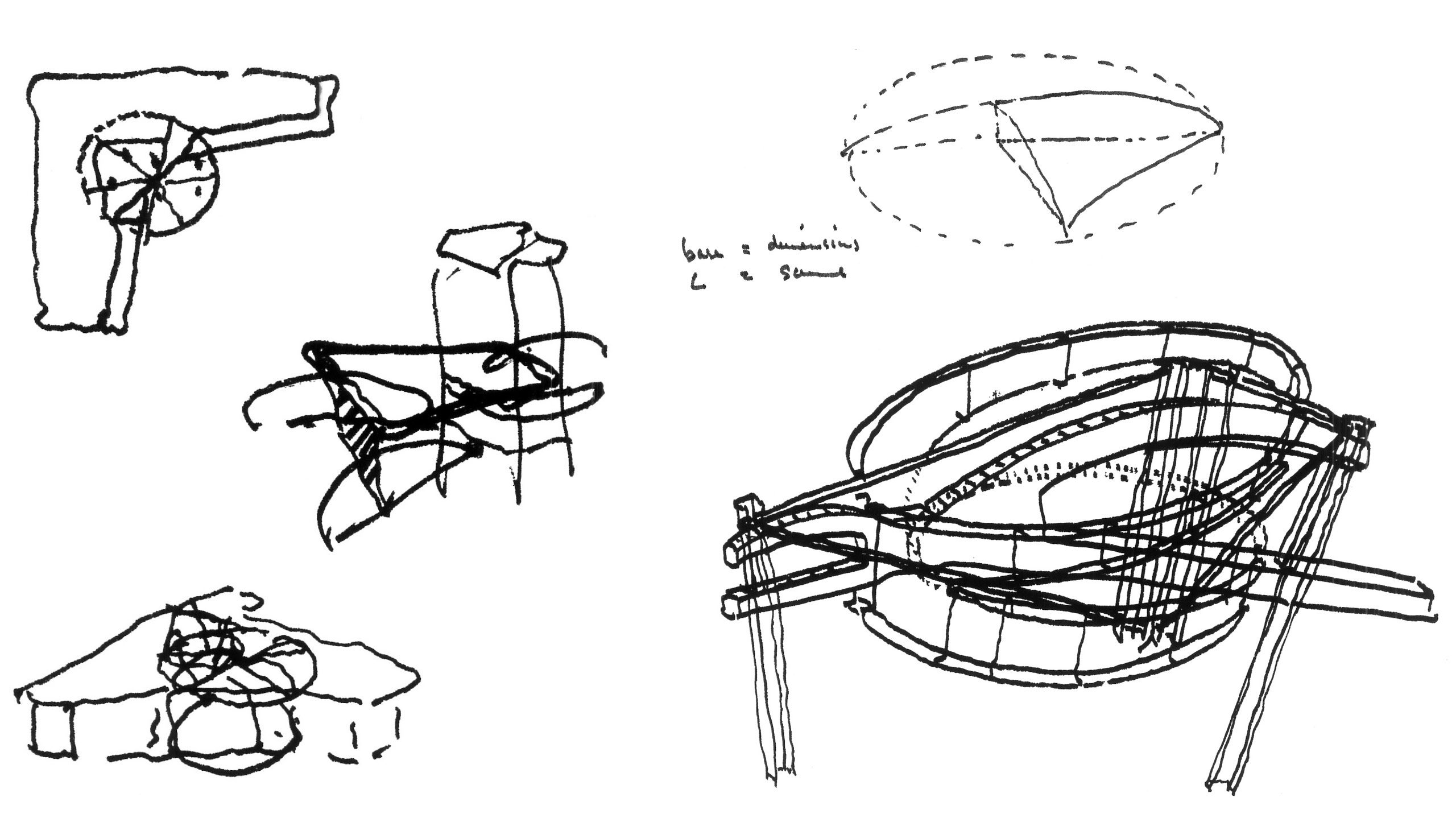
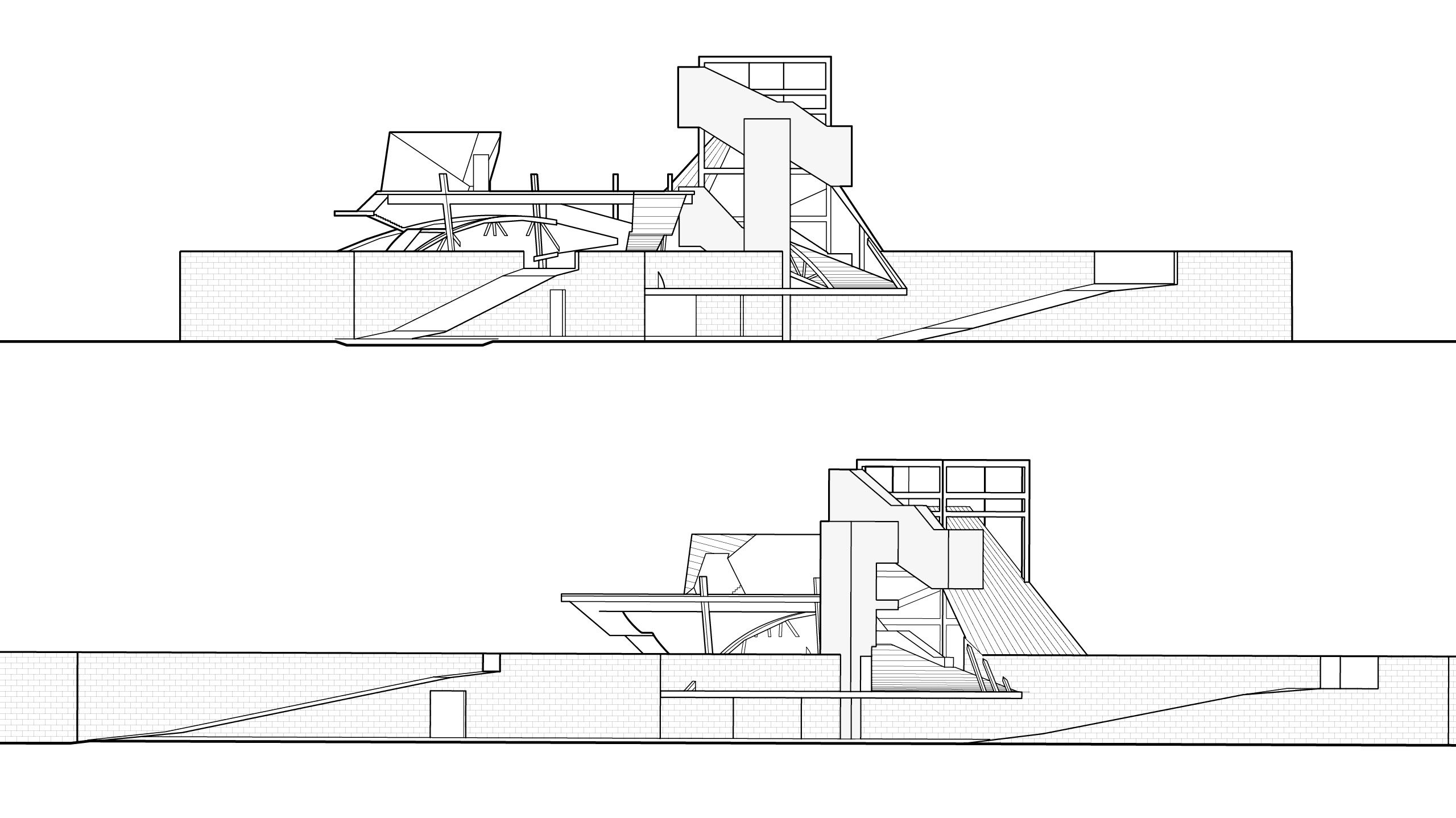
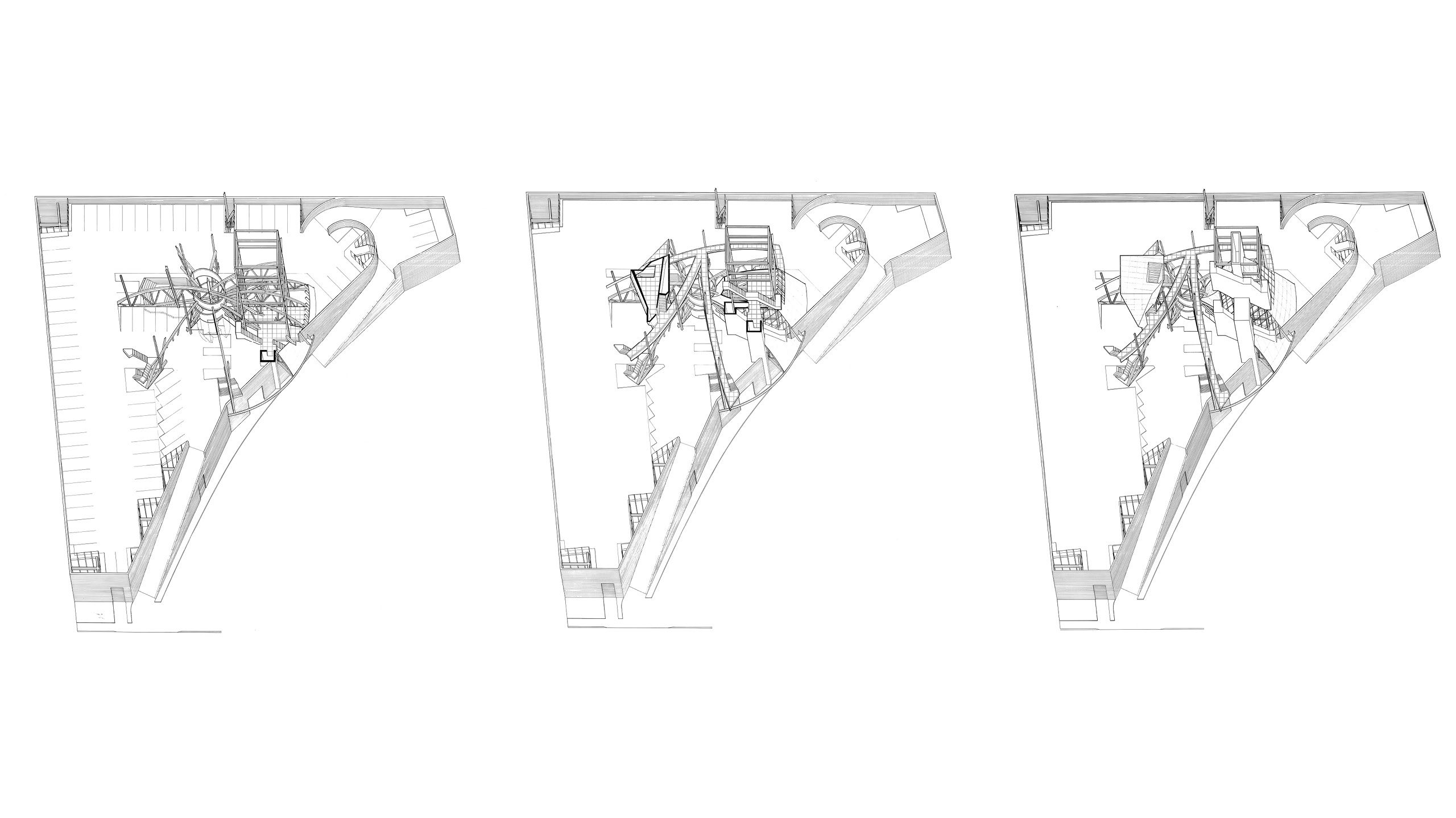
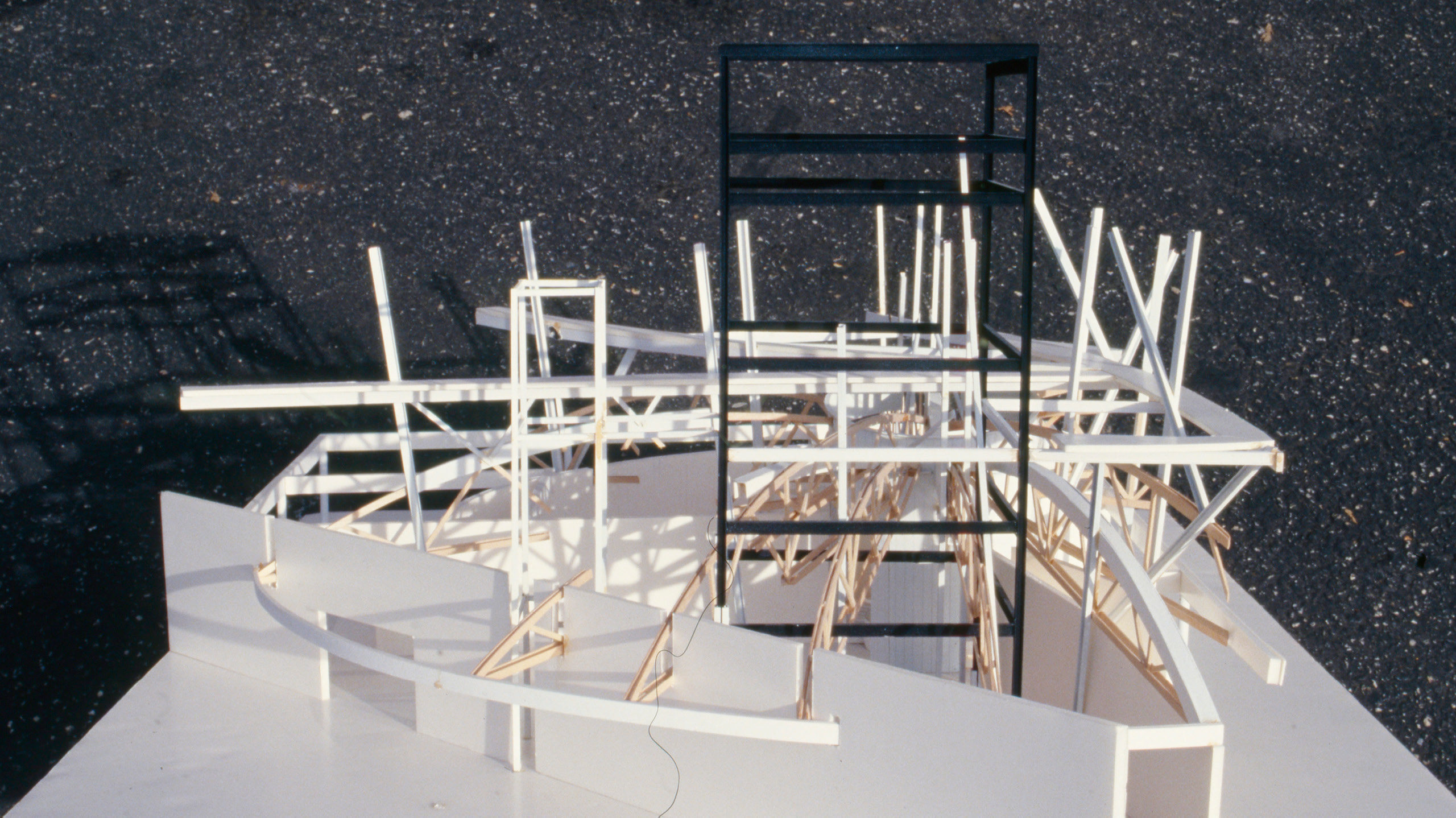
The current Hayden Tower proposal, scheduled to begin construction in February, 2012, abandons the triangular, single-story volume with roof-top parking, and substitutes the two, original warehouse structures, to be remodeled rather than demolished as in the original two schemes.
The 60 year old, steel frame structure which once enclosed the industrial press on the site is to be retained, with the metal panel enclosure removed, exposing the original frame and bracing. A translucent proscenium curtain will wrap the existing tower to a height of about thirty feet. That curtain can be mechanically closed around the tower base to segregate an open air gathering area, or be drawn so the open deck extends uninterrupted across the east front just outside the new entrance to the remodeled warehouses. The tower sits in the midst of a raised concrete deck overlooking the site on the Hayden Avenue side and employees can use the paved open space, and enclose a portion of the deck by drawing the acrylic curtain. Above the curtained off area, a new open roof system of structural steel T-sections and cables will support a grid of cylindrical steel drums to be used for planting a cactus landscape at the top of the old tower. The cylinders form the vertical, compressive members of a series of trusses that span the tower. The top chords of the trusses are the T’s, the bottom chords, the cables, and the planter drums are compressed between the two. The cactus plants will rise above the drums, but remain within the tower elevation, visible from distance, or appearing simply as a drum, cable, and steel T ceiling from below.
The two original warehouses will be spatially connected by demolishing an existing interior wall that currently separates the two contiguous structures, then sub-divided in accord with the tenant’s interior requirements for metal stud partitions to form closed office space and open work areas.
The conceptual focus of the project will be the new tower located at the eastern edge of the site, adjacent to Hayden Avenue. The original conception for this tower belongs to the 10 Towers phase of the project. A preliminary study model made from a square pile of note paper, describes a concept for a tower which is not quite a regular box, nor a clear, spatial departure from the regular box. Rather the model suggests a conceptually soft geometry, or better, a slumped tower. That proposal was originally studied as glass in the 10 Towers proposal. The proposed horizontal and vertical ‘mullions’ and the glazing enclosure system – all straight lines – was thoroughly evaluated. Glazing components were never curved, so the curving surfaces were always conveyed as the aggregate of a sequence of straight lines that continually shifted position across the four tower elevations.
The current proposal sustains the soft geometry analogue, but replaces the horizontal and vertical glass supports with half-inch steel plate, plasma cut, brise soleil frames, with orthogonal, clear, double-glazed panels that close and waterproof the building.
The surface curvature of the tower, from opposite side to opposite side, represent a reciprocal push and pull on opposing surfaces, meaning an indentation on the north elevation, is reciprocated with an approximately equivalent pull on the south elevation. In addition to the pushing/pulling, opposite elevation concept, the original tower block twists – rotates slightly, both clockwise at the top and counterclockwise toward the bottom. The essential curvature is conveyed by the horizontal and vertical steel plate grid, an analogue to the steel forms used to shape the slumped glass in the umbrella project. The straight line glass tower conception has been replaced by a sequence of steel brise soleil plates, the horizontals curving in plan, the verticals in section. The curving steel renders the slumped tower more literally than did the glass version.
Office
2007